

Oscar Snub
Goodnight, Oscar Levant

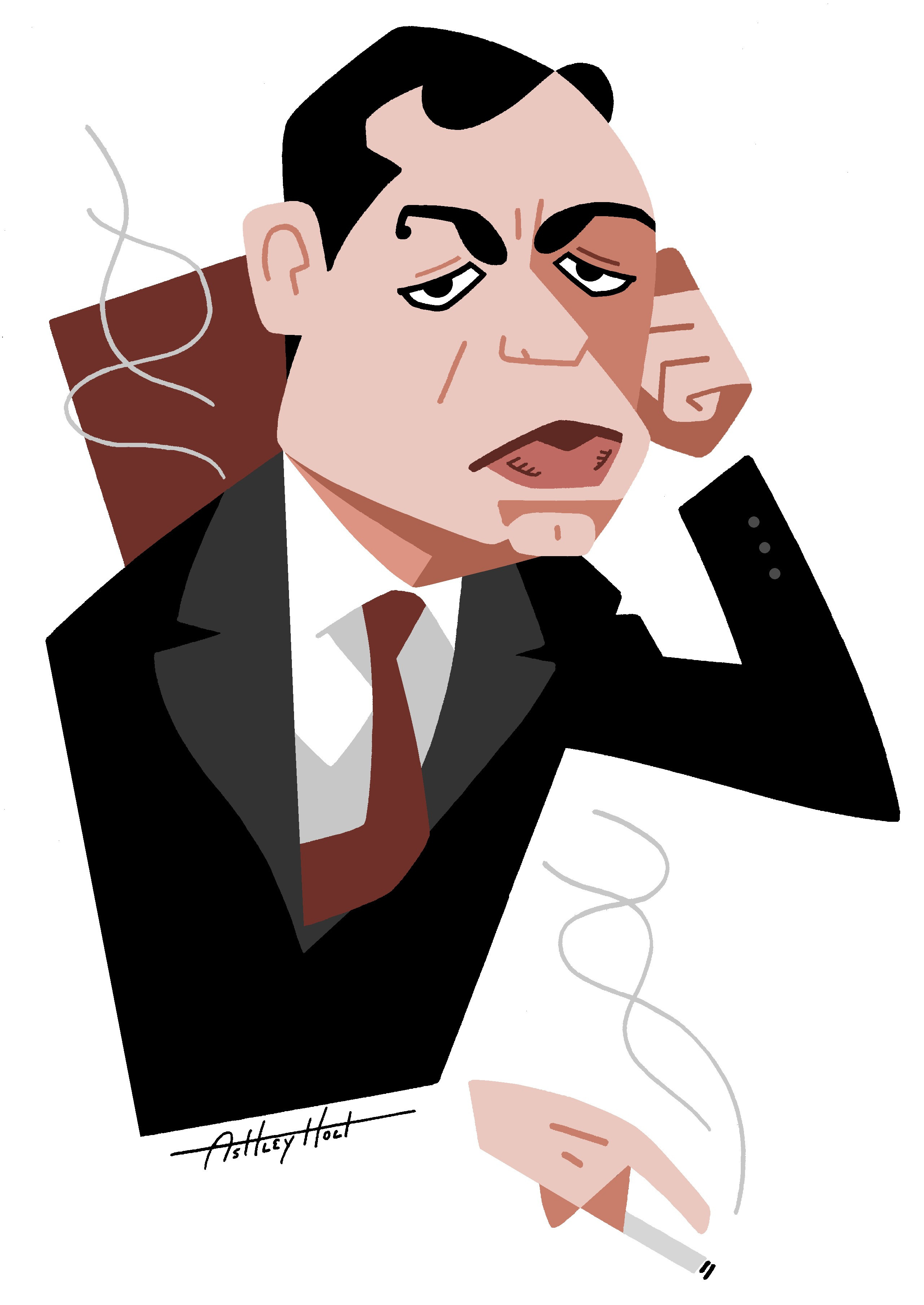
For those of you who have never heard of Oscar Levant, let me assure you that I’m not angry, just disappointed. I understand your plight; discovering Levant in this day and age feels like attending Bohemian Grove, with the mandatory vows of silence and secret handshakes. Even with my lifelong submersion into antique American culture, mingling with its now-obscure Talmadge and Boswell sisters, the road to Oscar was a trail of scattered breadcrumbs: a catch phrase from the long-forgotten Jack Paar, a punchline from has-been Mort Sahl, a discarded LP cover in a Goodwill store. Levant’s name popped up as a footnote to the footnotes.
This evaporation of former household names into the ether causes great pain in our elderly, as they themselves begin fading away into history, right along with Wendell Willkie and Nanette Fabray. Oscar Levant was once the highest-paid concert pianist in the world, enormously popular as a radio quiz show contestant, and a best-selling author. His best-friend film roles were tailored specifically to his notorious personality, featuring his skills at the Steinway and wisecracks he wrote himself. Everyone knew, and usually loved, Oscar Levant. He was part of our lives. Until one day, wham, “Oscar Levant? Isn’t he the guy who fought Floyd Mayweather?”
Perhaps it’s to be expected when B-players like Oscar fall off the map. He was, on the whole, his generation’s Charles Nelson Reilly, an amusing talk show guest who went the way of George Goebel and Foster Brooks. It’s all the more horrifying when kids today confess they’ve never heard of huge stars like Sammy Davis, Jr. Or Doris Day. Or Burt Lancaster. Or that they’ve never seen The Wizard of Oz. Or, in fact, have never seen a movie made before 2000. What are they teaching these kids in today’s DEI indoctrination centers?1
As a transplant to Germany, I’ve been given a crash course in dead celebrities I knew nothing about: Udo Jurgens, Udo Lindenberg, Udo Kier – all the Udos. The Germans are grand pop culture archivists. If you had a hit song for two weeks in 1963 or appeared on a popular sitcom in the 1971 season, you are in the family forever. Our grandchildren know Heidi Brühl. You don’t, I didn’t, but they do.
But this is invariably too much to expect of the average Instagrammed youngster. They’re having enough trouble remembering last season’s celebrity influencers, who crash into the depths of low follower counts as quickly as they became viral. And as we know, keeping up with this daily tidal wave of clickbait personalities, all simultaneously flooding our smartphones, gasping for our lifesaving clicks and likes, is making us all anxious, depressed, and clinically psychoneurotic.
All the more reason Oscar Levant should speak to us today. Oscar, who was a certified hysteric long before it was cool, made numerous, well-publicized vacations in asylums and psych wards for his chronic OCD afflictions and subsequent pill popping. Instead of trying to damage-control his career in the face of these scandals, as was the method of the day, Oscar decided to, as the self-helpers now advise, lean in. He took his anxiety attack to television, twitching and blinking his way through talk shows, game shows, and his own syndicated Oscar Levant Show, turning his infamous, cutting wit on himself and his status as America’s favorite mental patient. He was at his funniest and most brutally real while doing it, just one of the reasons Levant became, after my long road to enlightenment, my hero. Oscar Levant, patron saint of smartass neurotics.
He would, ironically enough, have made a fabulous YouTuber.
As it is, the Levant-curious will have to make do with his handful of surviving TV appearances (a few Jack Paar clips, an appearance on What’s My Line?, a single episode of The Oscar Levant Show), his panel gig on radio’s Information Please (many episodes available online), and, pirate streams willing, his filmography. I recommend Humoresque, a relentless assault of Joan Crawford melodrama, in which Oscar is in peak, zinger-slinging form.
See it now before it’s totally forgotten.
- A.H.
(And let’s not forget Ashley’s website, jam-packed with portraits and other drawings, his highly-affordable prints and books currently available, his eagerness for your portrait commission, and his contact email, thrdgll@gmail.com, where he longs to hear from you.)
I saw a video clip of You Bet Your Life being passed around online recently. Commenters wanted to know why the host was being so rude to the guests.
Thanks for this, pally.
It bears mentioning that within a year of my parent’s finally splitting up for good, my mother was out to all hours with the stream of badly chosen men she held responsible for her misery, and I, aged ten to thirteen, was up to all hours watching Jack Paar, unaware at that time that I was receiving my first semester of adult education.
Paar himself was a piece of work, an attitudinal heterosexual fussbudget of the first order, but it was his guests that hipped me to a wider world and world view than I’d been led to expect outside of East Flatbush. Dodie Goodman, Jonathan Winters, Peggy Cass, Jack Douglas, Genevieve, Alexander King, and most of all, Oscar Levant, showed me the way.
My life was permanently transformed, and by the time of my Bar Mitzvah, I was a first draft of who I am to this very day.
Levant, this droll, grouchy frog faced fellow, who looked like he hadn’t had a decent night’s sleep since the Eisenhower administration, who had been Sancho Panza to George Gershwin’s Don Quixote, for fuck’s sake, immediately replaced Johnny Mack Brown as my primary role model.
I had the sneaking suspicion, not to say desperate hope, that in his rumpled elegance, I was getting a glimpse of where the world might take me, a quarter of a century hence.
As noted, many thanks for this reminder of my misspent boyhood.
"The world needs more geniuses with humility. There are so few of us" and "There is a fine line between genius and insanity. I have erased it" He was the thinking man's Rodney Dangerfield and being piano legend was just his side-hustle. c. 1962, Among my parent's bottomless stack of Bing Crosby and Dihah Shore cuts there was an old set of 78s, weighing 12 pounds, "Rhapsody in Blue" played by Oscar Levant. He was top-billed on the cover so I assumed that he wrote it. I liked the records, but as an 8 year old I didn't know who Levant was save for the very dim awareness that he represented culture and sophisication far beyond my own modest aesthetic upbringing, halfway between middle-brow and American shitkicker.